
Category: Dehydrated onion
Onion granules
HS code 0712.20Origin: Egypt40–80 mesh (0.2–0.5 mm)
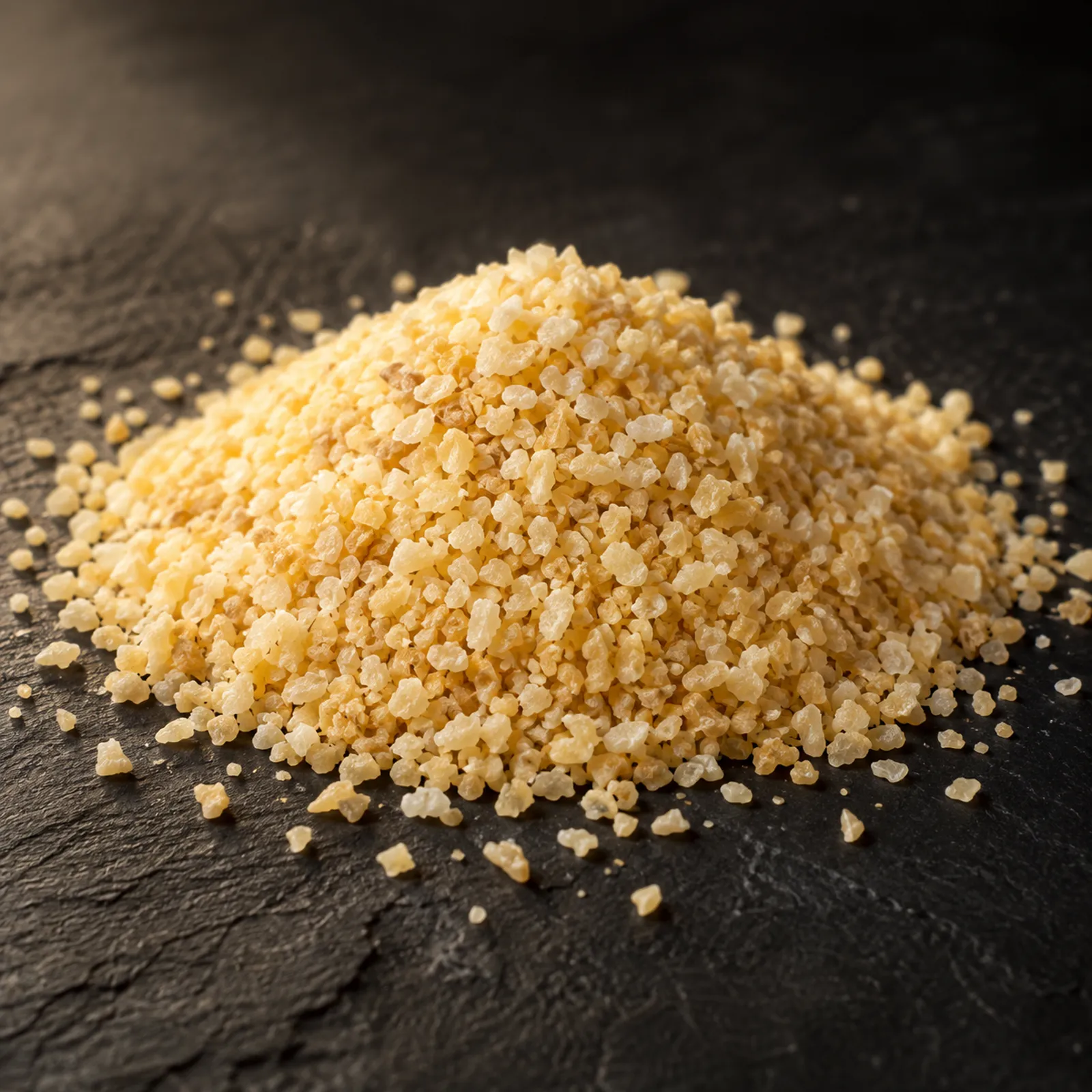
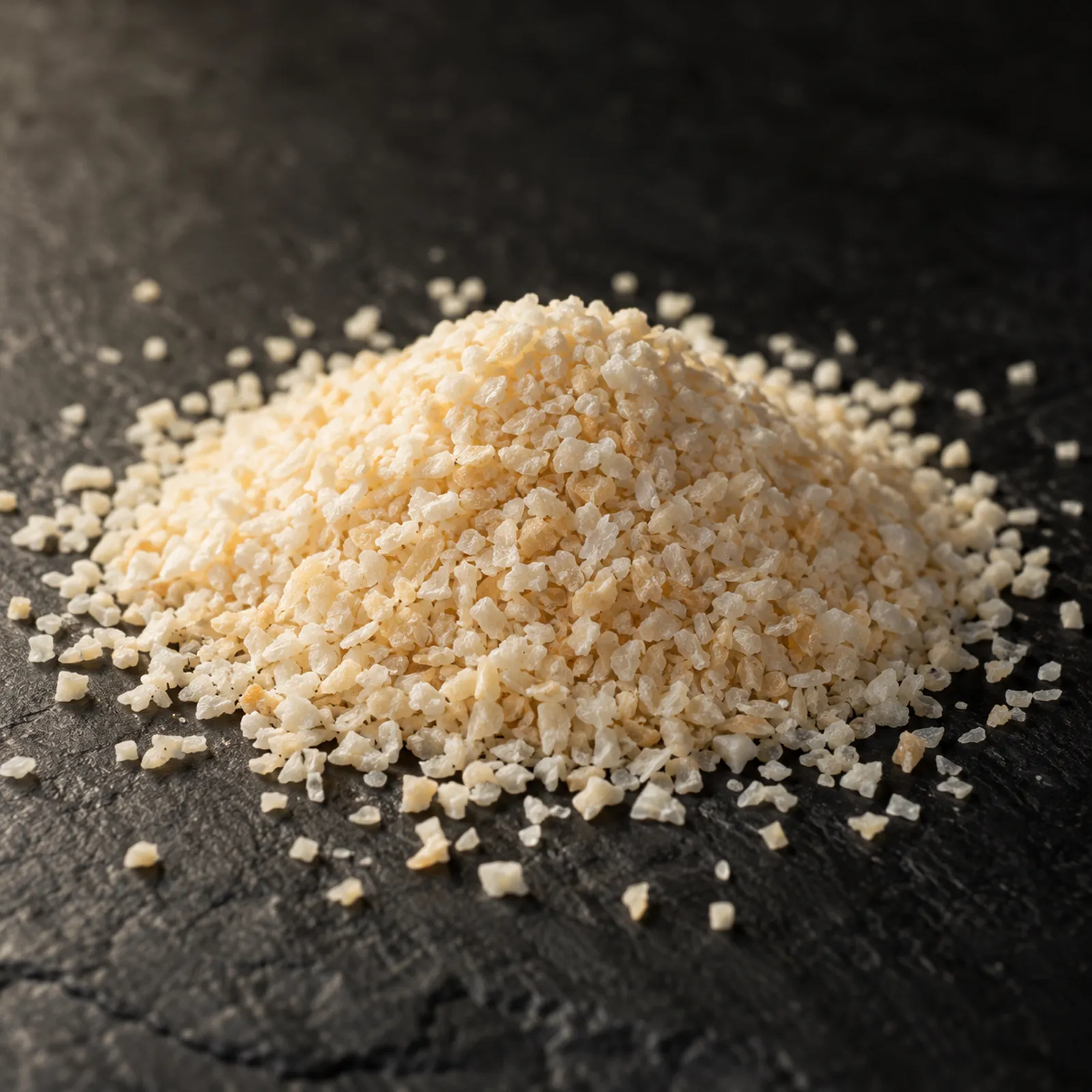
Onion granules with a sand-like grain that stays visible in a blend and runs cleanly through dosing equipment. Granules give more texture than powder and cake less in humid stores.
Pack size25 kg bag / 20 kg carton Example
Minimum order1 pallet, or mixed in one container Example
Dispatch2–3 weeks after confirmation Example
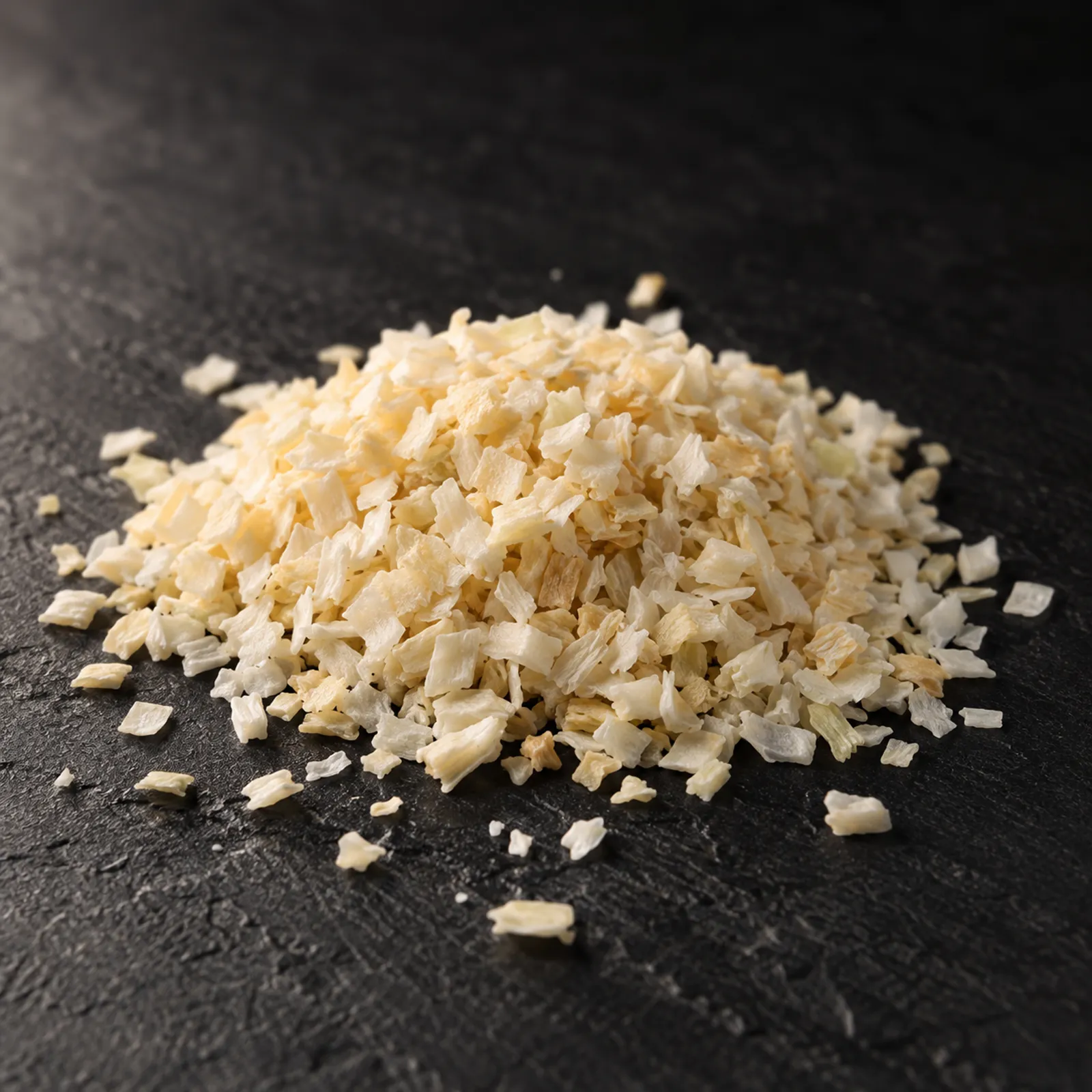
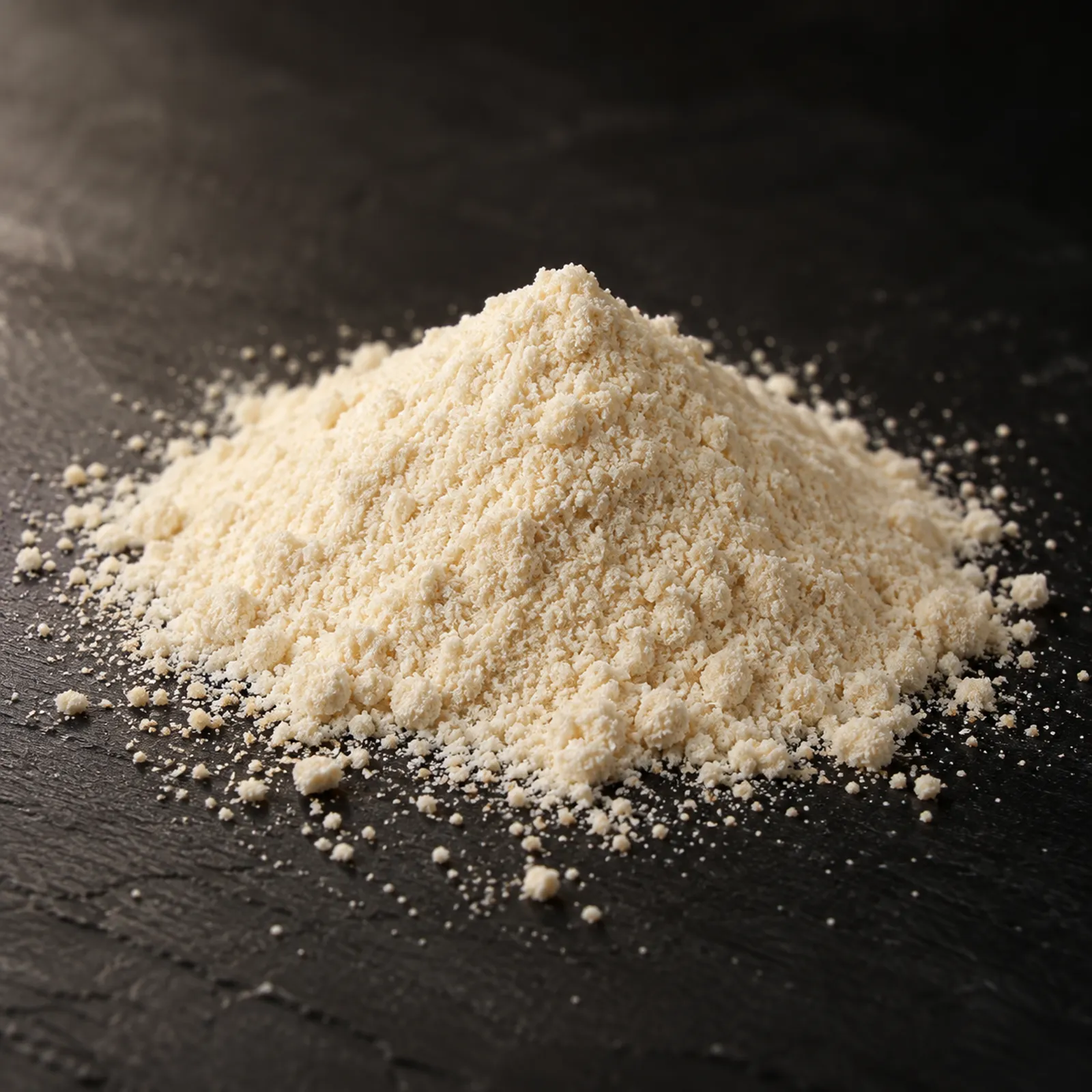
The standard grain is 40–80 mesh (0.2–0.5 mm); a coarse 16–40 mesh grade (0.5–1 mm) suits grinders and rubs. Toasted granules are made as well.
Specification
Onion granules
Typical specification. The company publishes its sheets on request; values below are marked where they are market examples.
| Mesh / size | 40–80 mesh (0.2–0.5 mm)Example |
|---|---|
| Moisture | ≤ 6 % · target 5 %Example |
| Colour | White to creamy whiteExample |
| Aerobic plate count | ≤ 100,000 cfu/g (low-micro ≤ 10,000 on request)Example |
| Yeasts and moulds | ≤ 1,000 cfu/gExample |
| E. coli | < 10 cfu/gExample |
| Salmonella | Absent in 25 gExample |
| Microbial reduction | Not disclosed |
| Shelf life | 24 months in original packingExample |
| Storage | Cool, dry, ≤ 65% RH, away from light |
| Applications | Spice blends and rubs, meat and sausage seasonings, retail spice jars and grinders, bread toppings. |
Values marked "Example" are typical market values, not published by the company. They are confirmed on the spec sheet with each quote.
Choose a cut
See every cut at its real size.
Compare this product with the other cuts at true scale.
1:1
Make the ruler true to size
Hold a bank card (85.6 mm wide) against the screen and drag the slider until the outline matches its width.
How we export
How we export it
Packing and labelling
20 kg or 25 kg net in a double food-grade PE liner (blue inner bag, heat-sealed or tied) inside a multi-wall kraft bag or an export carton. Each pack carries product, lot, net weight, production and best-before dates. Bar-coded plastic pallets, stretch-wrapped.
Weights: Example · blue liner and plastic pallets as declared
Pallet and container load
20ft containerabout 12–14 tExample
40ft containerabout 24–26 tExample
Bulky cuts fill a container by volume before weight. The pallet plan is confirmed with each quote.
Incoterms · Ports of loading
- Incoterms
- FOB, CFR or CIF
- Ports of loading
- Alexandria, Port Said or Damietta Example
Export documents
- Certificate of analysis (CoA) for every lot
- Certificate of origin
- Health certificate
- Phytosanitary certificate, if the destination requires it
- Commercial invoice
- Packing list
- EUR.1 for 0% EU duty on Egyptian origin
From inquiry to arrival Example
- InquiryDay 0
You send cut, spec, volume and port.
- Sample3–5 days
Sample by courier with the lot CoA.
- Confirmation1–2 days
Spec sheet and proforma signed.
- Production1–2 weeks
Produced or allocated from stock.
- QC2–3 days
Lot tested in-house; CoA issued.
- Packing1–2 days
Packed, labelled, palletised.
- Shipping10–25 days
Sea freight from Alexandria or Port Said.
- ArrivalOn arrival
Papers ready for customs clearance.
Markets it ships to
40+ markets, as declared by the plant.
HS code and origin
- HS
- 0712.20
- EU CN
- 0712 20 00
- Origin
- Egypt
Dried onion is classified under HS 0712.20; dried garlic and leek fall under 0712.90 (other dried vegetables). EU CN codes shown; national lines vary.
FAQ
Questions buyers ask
Which granule size should I choose?+
40–80 mesh suits blends where the onion should disappear into the mix; 16–40 mesh stays visible and suits rubs, grinders and toppings. We can send both as samples so your QA team can compare.
Is the product steam-sterilised or ETO-free?+
The plant does not publish its microbial-reduction method. Ask with your quote: the treatment and an ethylene-oxide-free statement are confirmed in writing per contract.
Can onion and garlic share one container?+
Yes. Mixed containers are normal. Each pallet is bar-coded and listed by product and lot on the packing list.
Do you pack under our brand?+
Yes. The plant supplies private-label partners. Send your label, pack size and pallet plan with the inquiry.