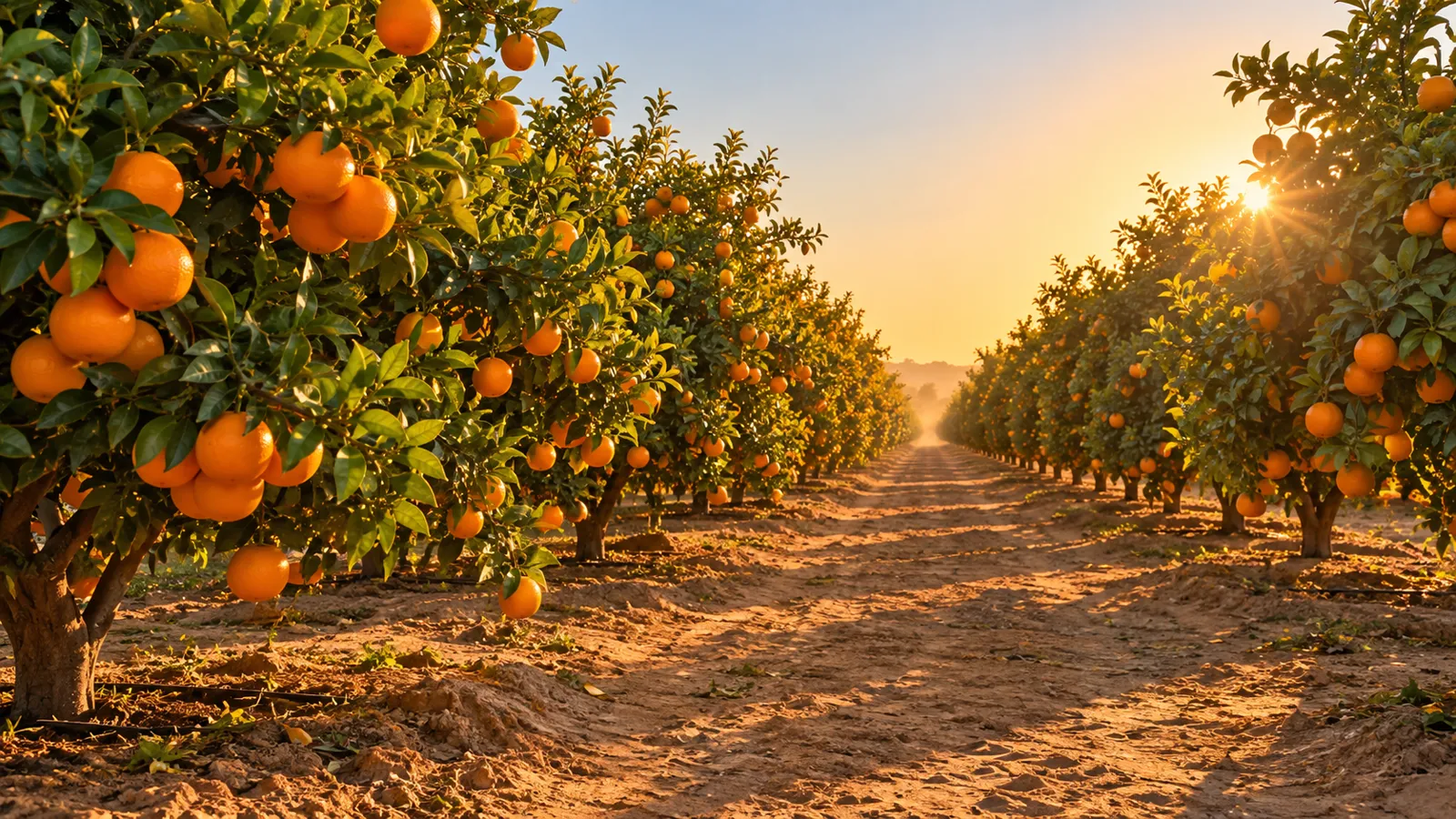
Fresh Egyptian Oranges
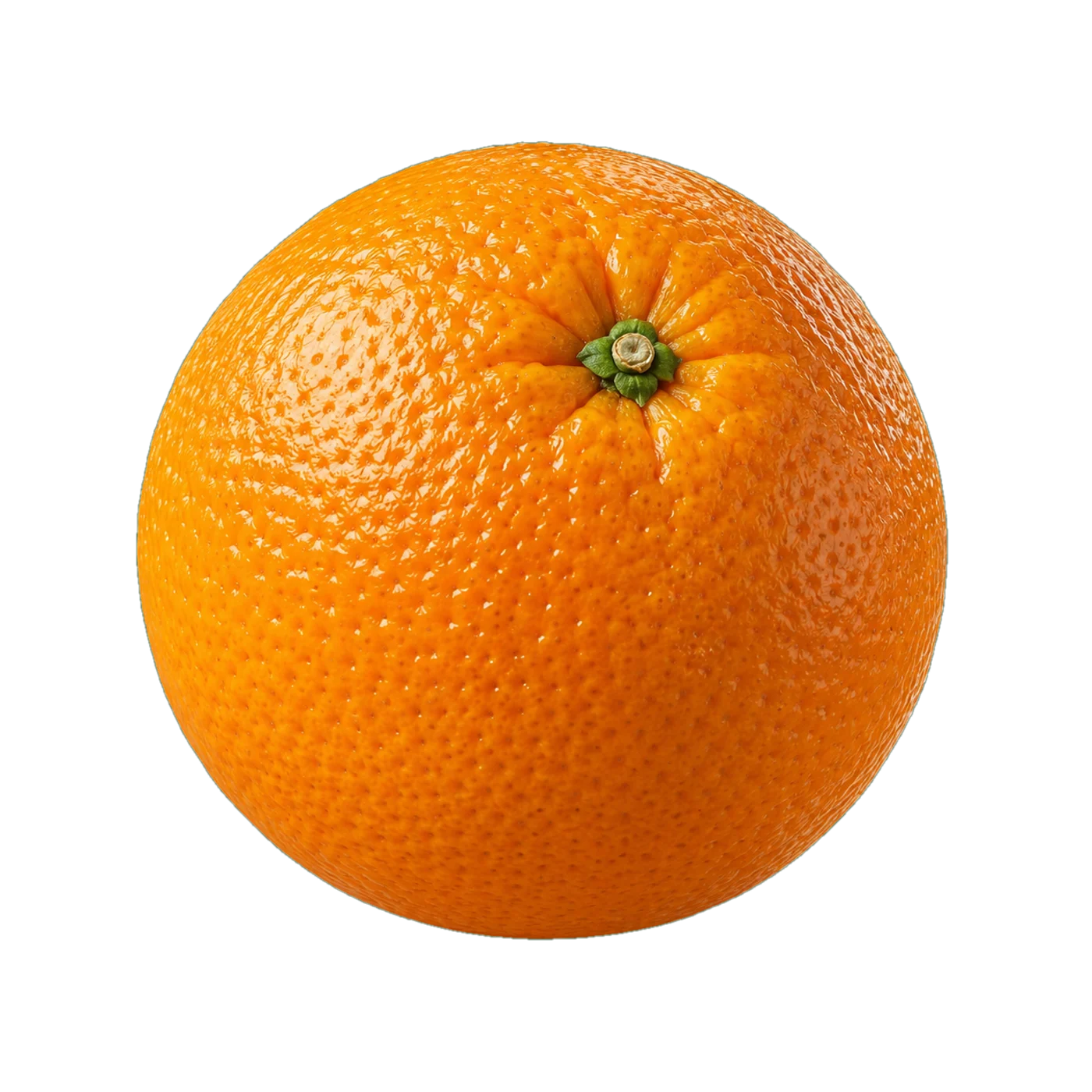
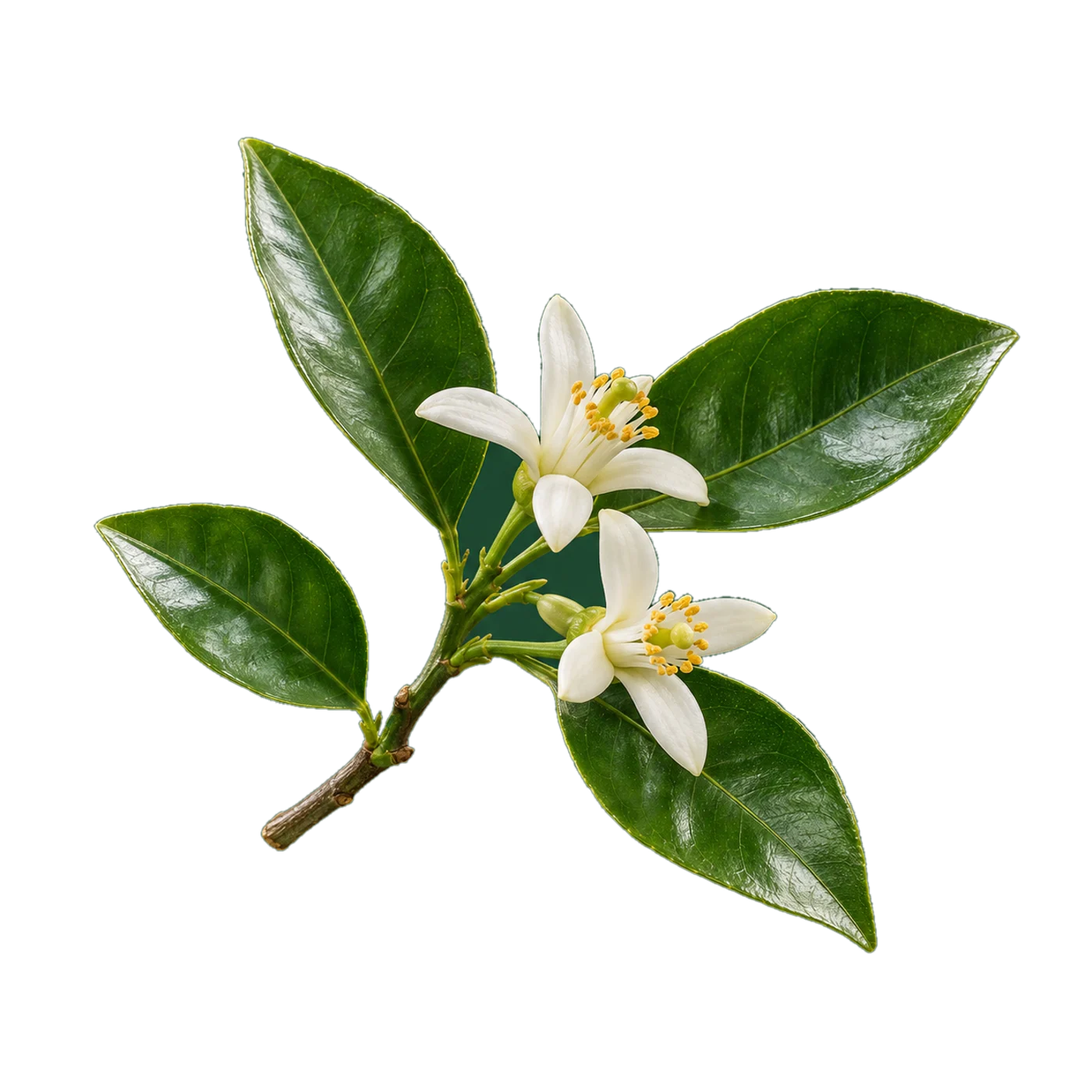
Packed and shipped cold from a packhouse in Sadat City, Egypt.
Navel, Valencia, Baladi, HS 0805.10, Sadat City packhouse, Reefer 2–6 °C, Alexandria · Damietta, 15 kg cartons
01 — The range
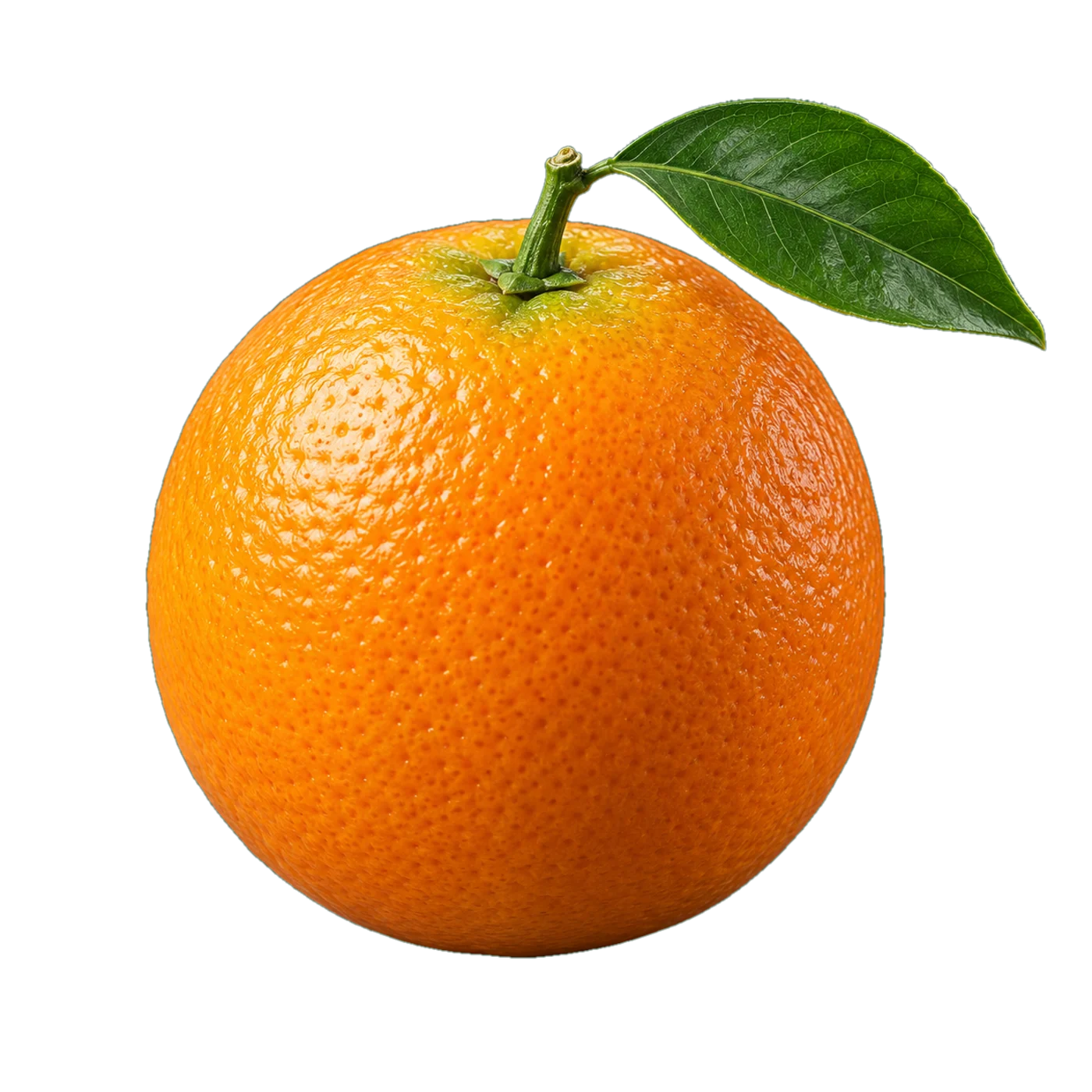
Pick a variety.
03 — Season & market planner
When does it
land with you?
Pick your market. See what the packhouse ships each month, when it arrives, and what the border asks for.
Your market
Leaves Egypt
Arrives in Netherlands (EU) Example
Main competitor window Example
Packhouse calendarEgypt season (USDA), askOn arrivalSouth Africa (counter-season)
Shipping month
January
In season this month
- Route
- Sea, reefer, Mediterranean
- Transit
- 10–14 days Example
- Cold treatment
- Not required Only if the false-codling-moth systems approach with cold treatment is used (Reg. (EU) 2022/959). Confirm the option with CAPQ.
- Import duty
- 0% with EUR.1 (MFN 16%). EU entry-price system applies.
- Documents
- Phytosanitary certificate with Annex VII additional declarations (Reg. 2019/2072), EUR.1, GLOBALG.A.P. + GRASP, residue report per lot
Egyptian oranges are under increased residue checks at EU entry (Reg. 2019/1793).
Packhouse calendar as published by the packhouse; Egypt season and market rules from public sources (USDA, EU, GACC, NBR). Transit days are indicative.
04 — No.01, up close
Seedless.
Easy peel.
Deep colour.
Packed by count.
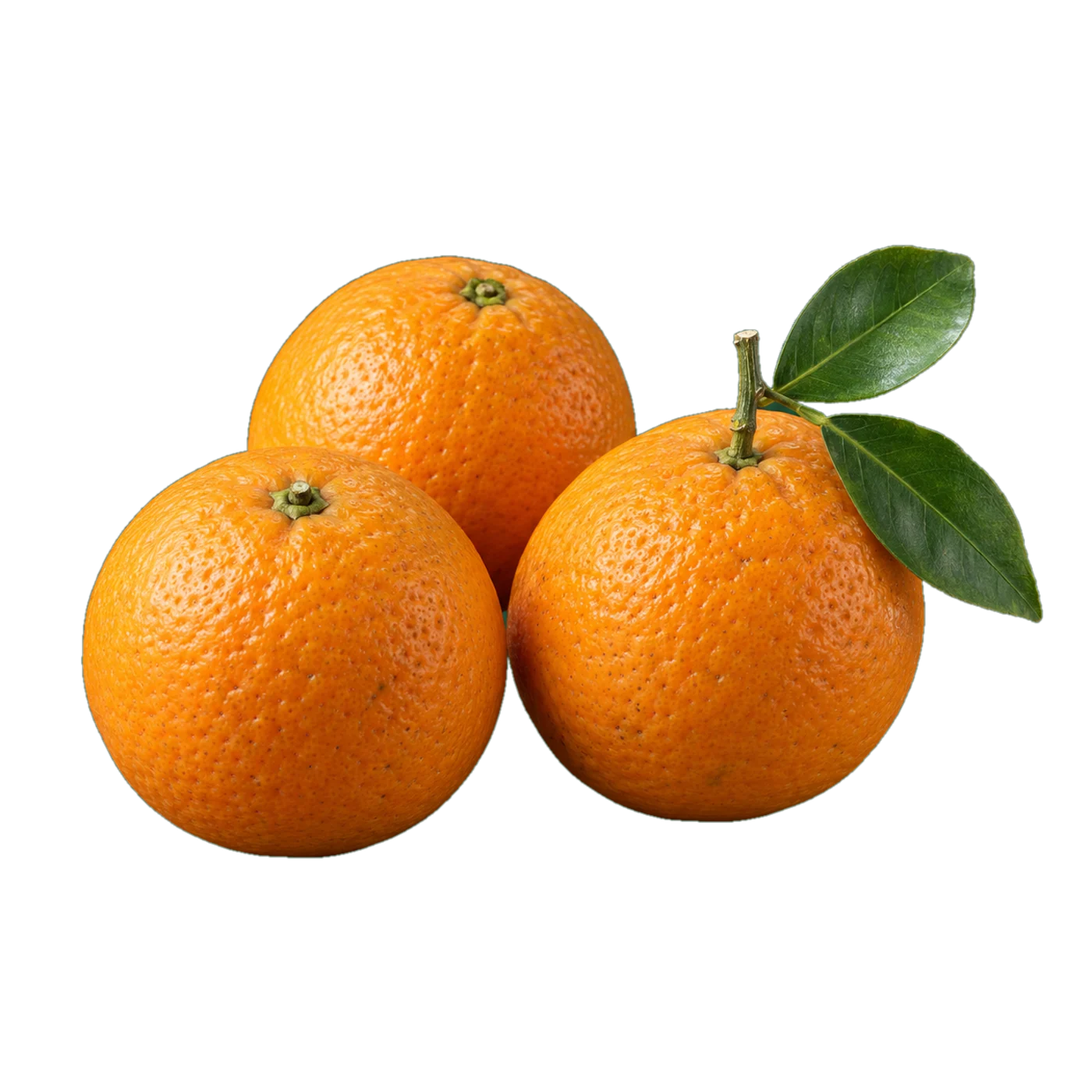
 Navel, cut on the packhouse line.
05 — Orchard to reefer
From the tree to the reefer.
-
 01 / 06
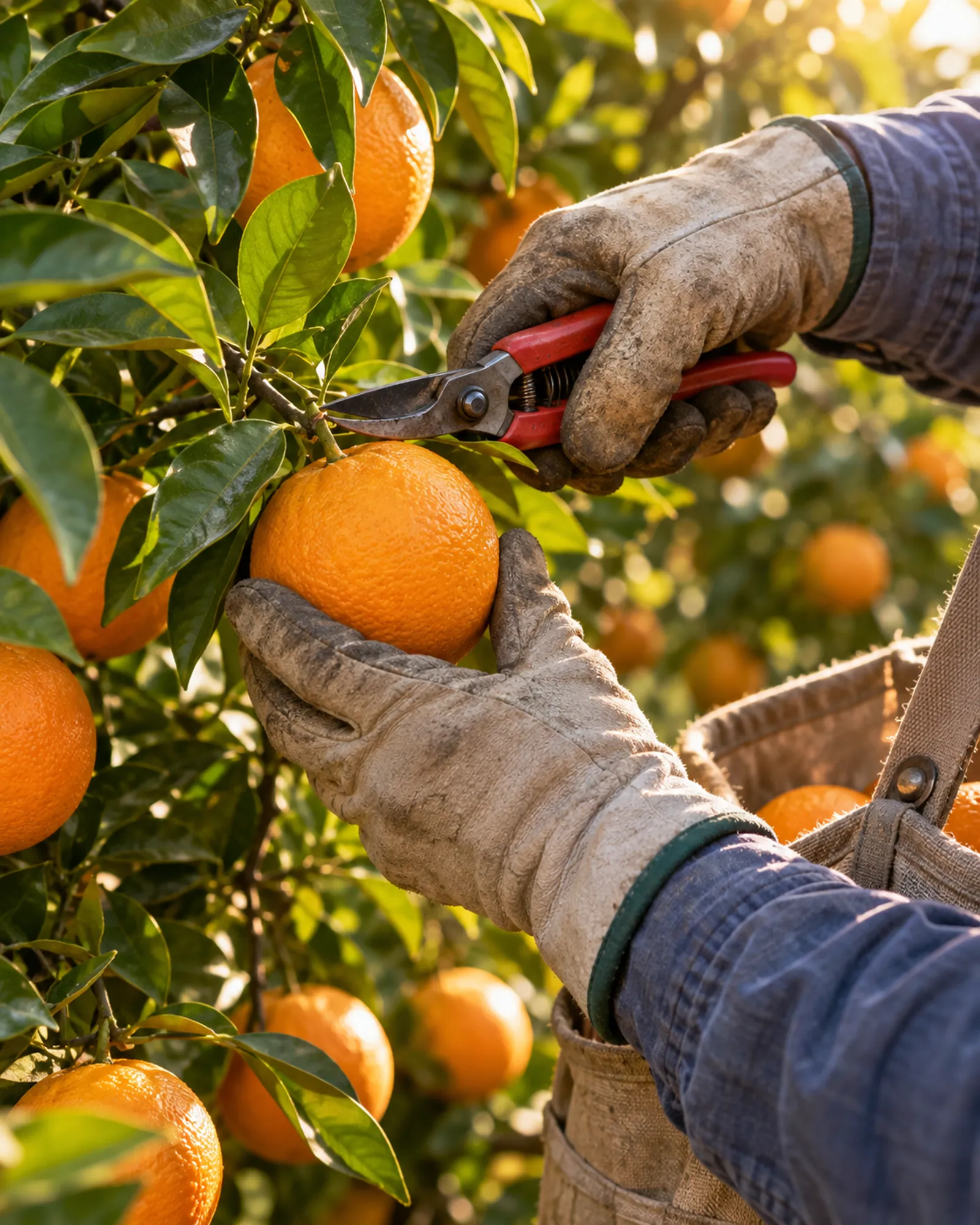
Picked by hand
Clipped at the stem, never pulled, to keep the button and the peel whole.
-
 02 / 06
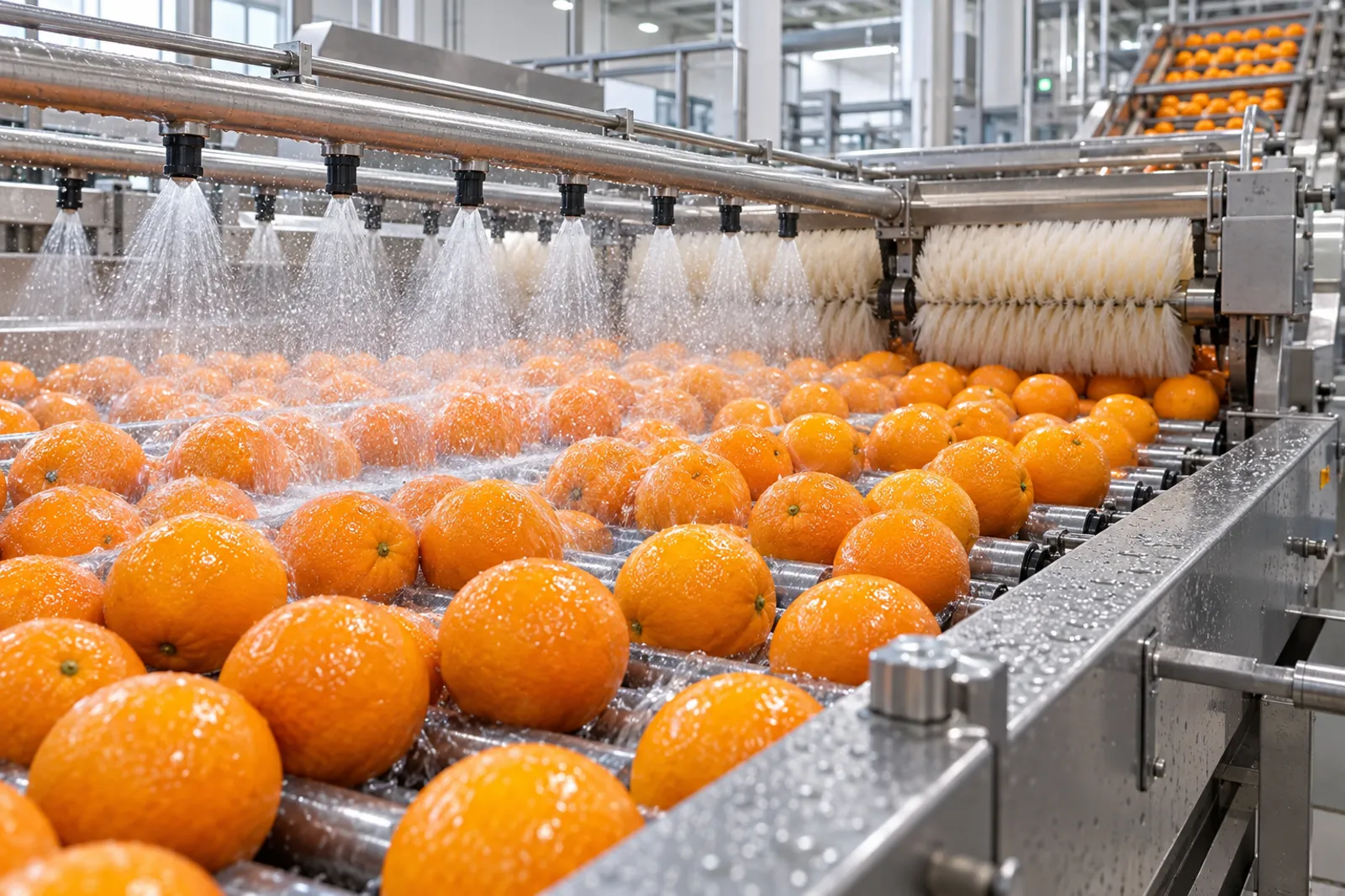
Washed
Brushes and water sprays clean the fruit as it enters the line.
-
 03 / 06
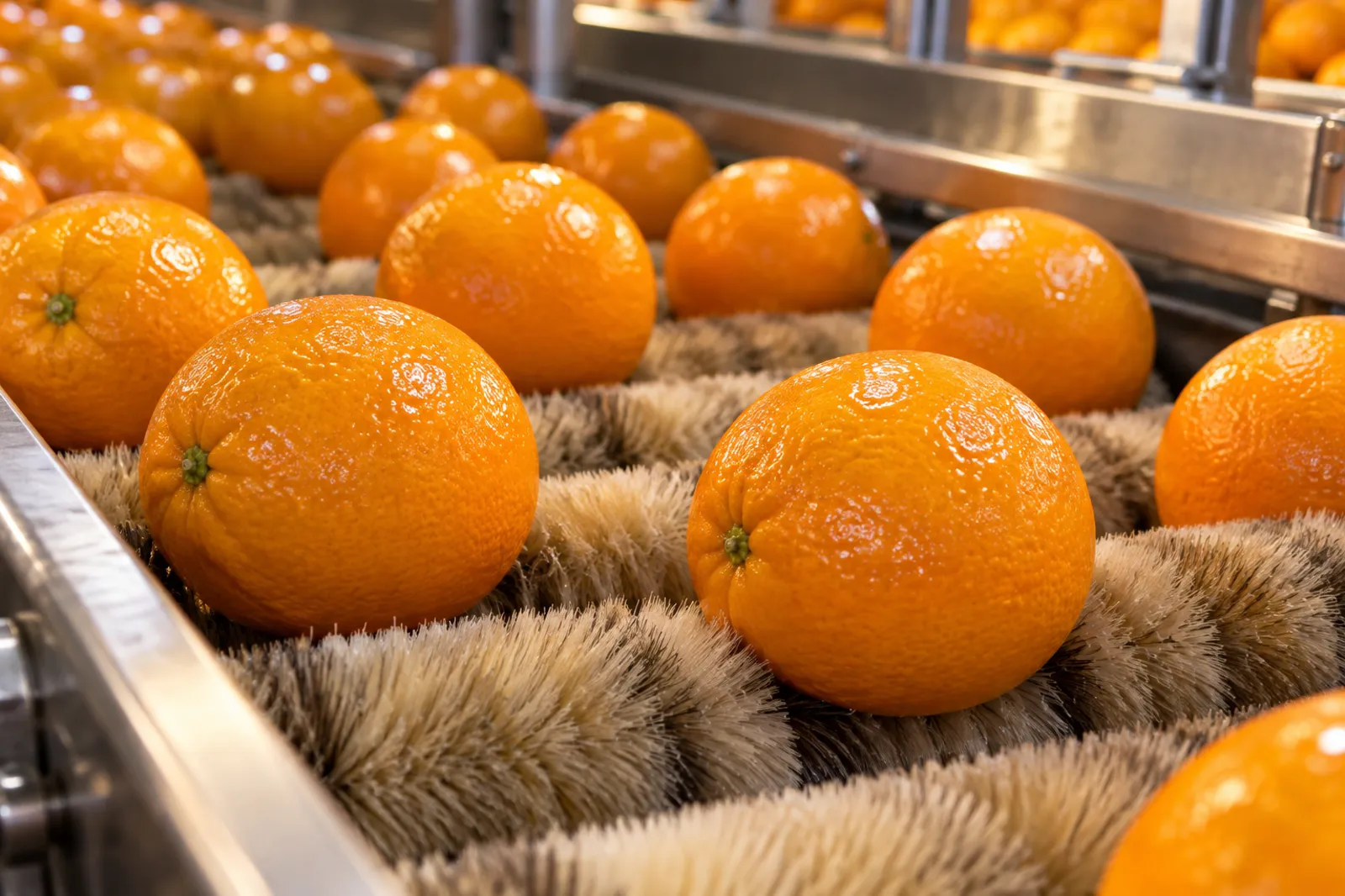
Waxed
A food-grade wax and soft brushes restore the shine and slow water loss.
-
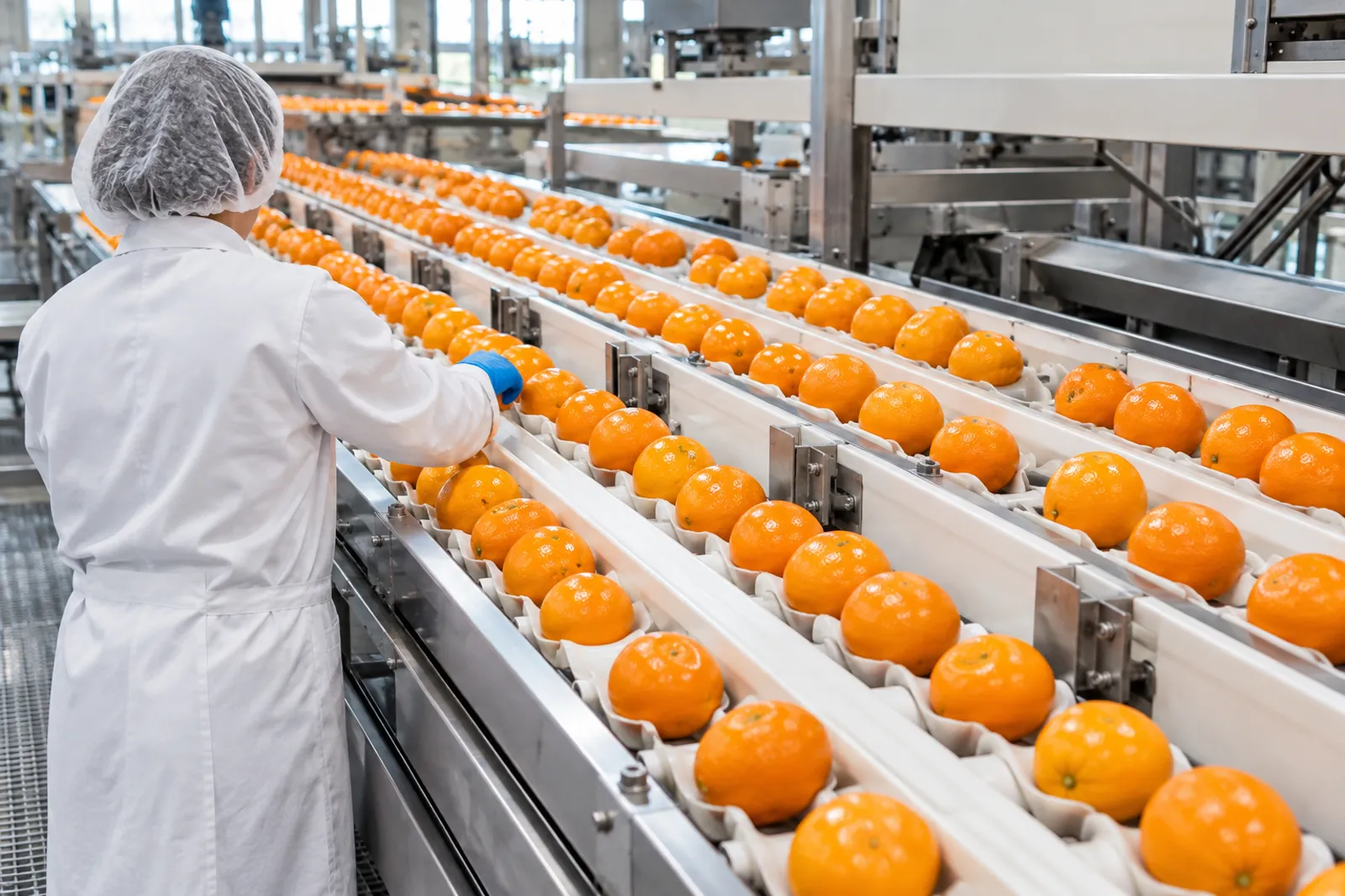 04 / 06
Graded and sized
Fruit is sorted by quality and size into counts per carton.
-
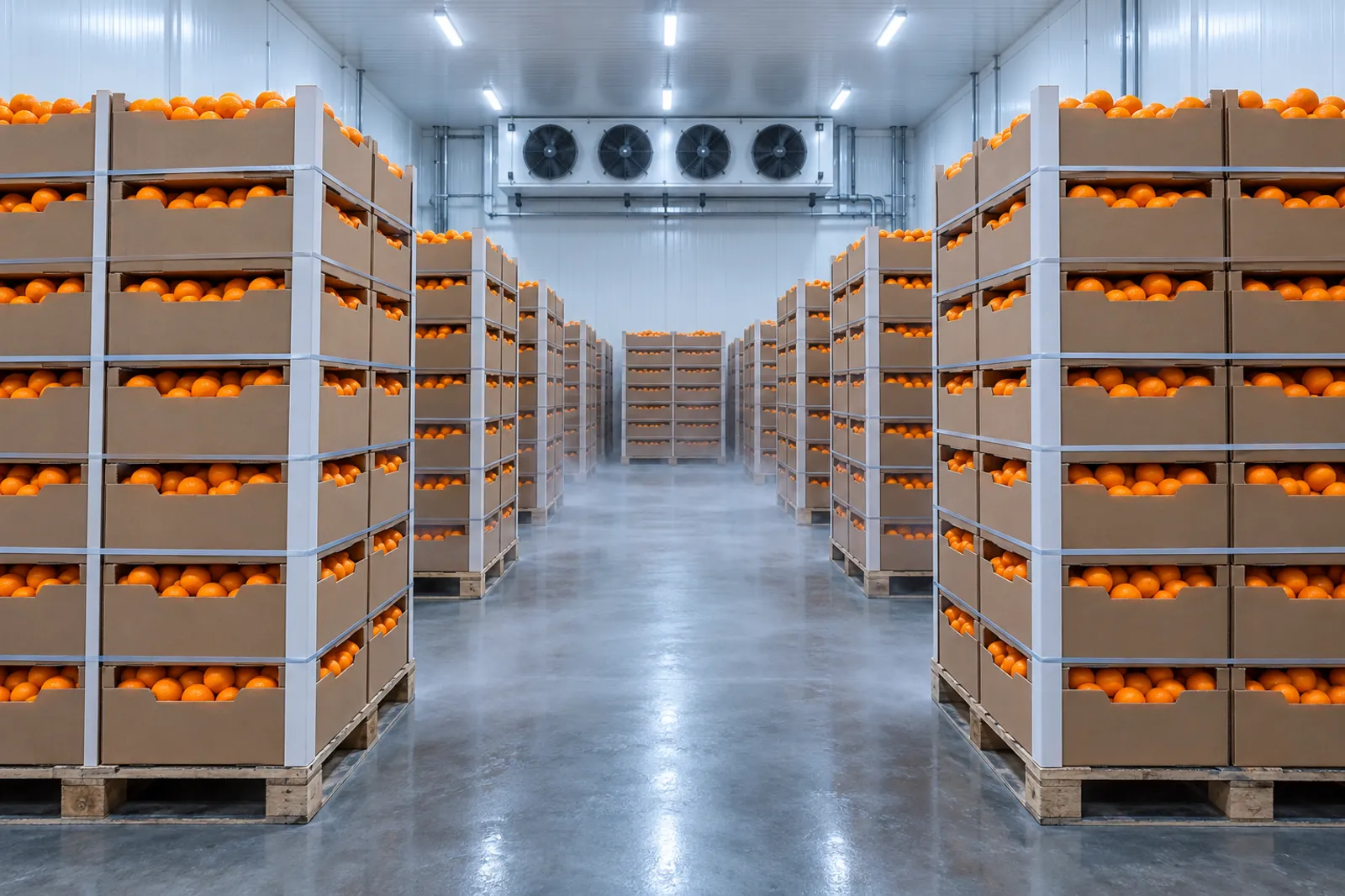 05 / 06
Cooled
Pallets go into cold store and down to transit temperature before loading.
-
 06 / 06
Loaded cold
Reefer containers leave for Alexandria or Damietta, set to the market.
Line steps describe a typical citrus packhouse; ask the company for its own equipment list.
Pack formats
Five ways to ship it.
From a 15 kg open-top carton to a 600 kg bin. Choose by route, market and shelf.
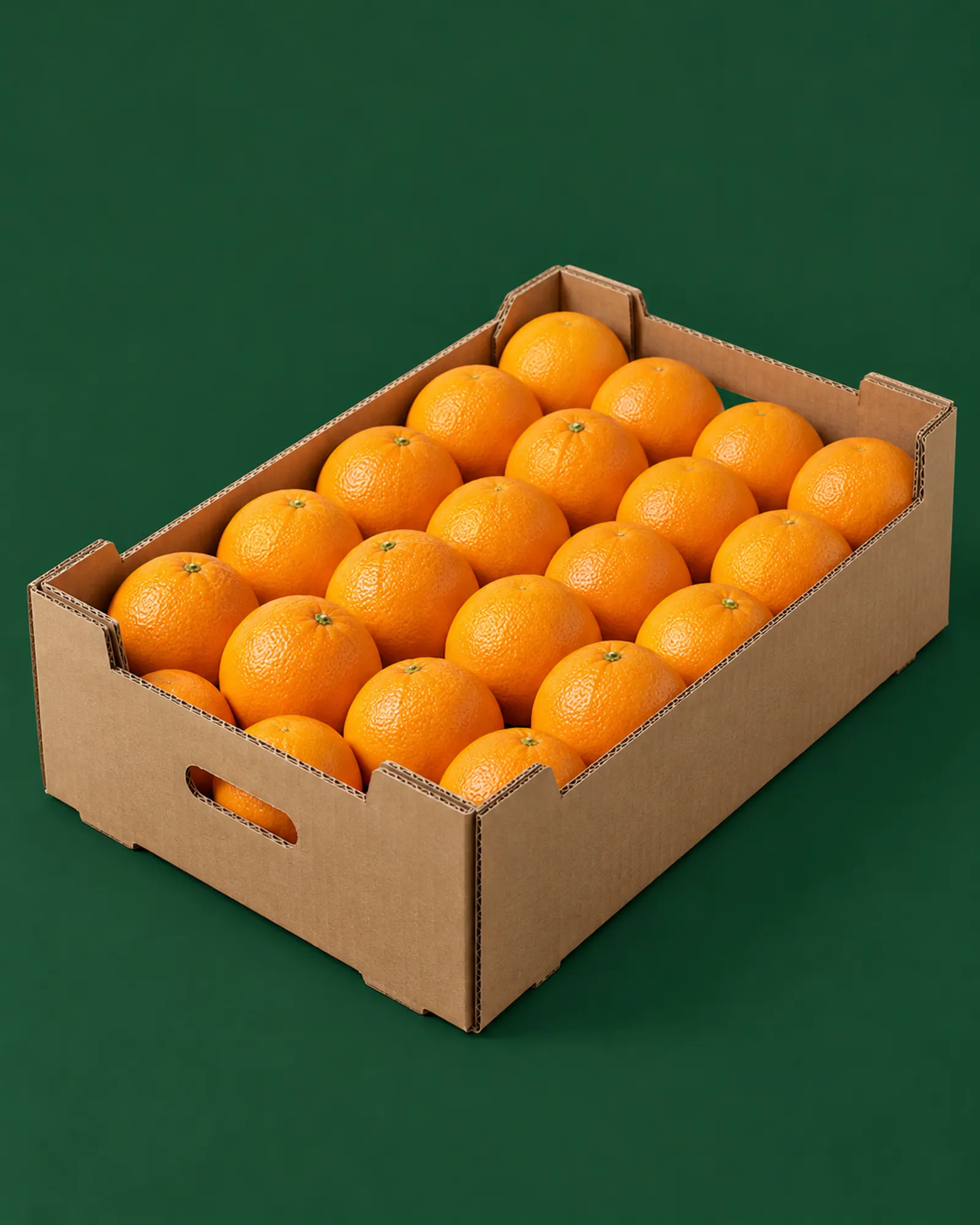
15 kg open-top carton
The standard export carton: fruit visible, fast to inspect.
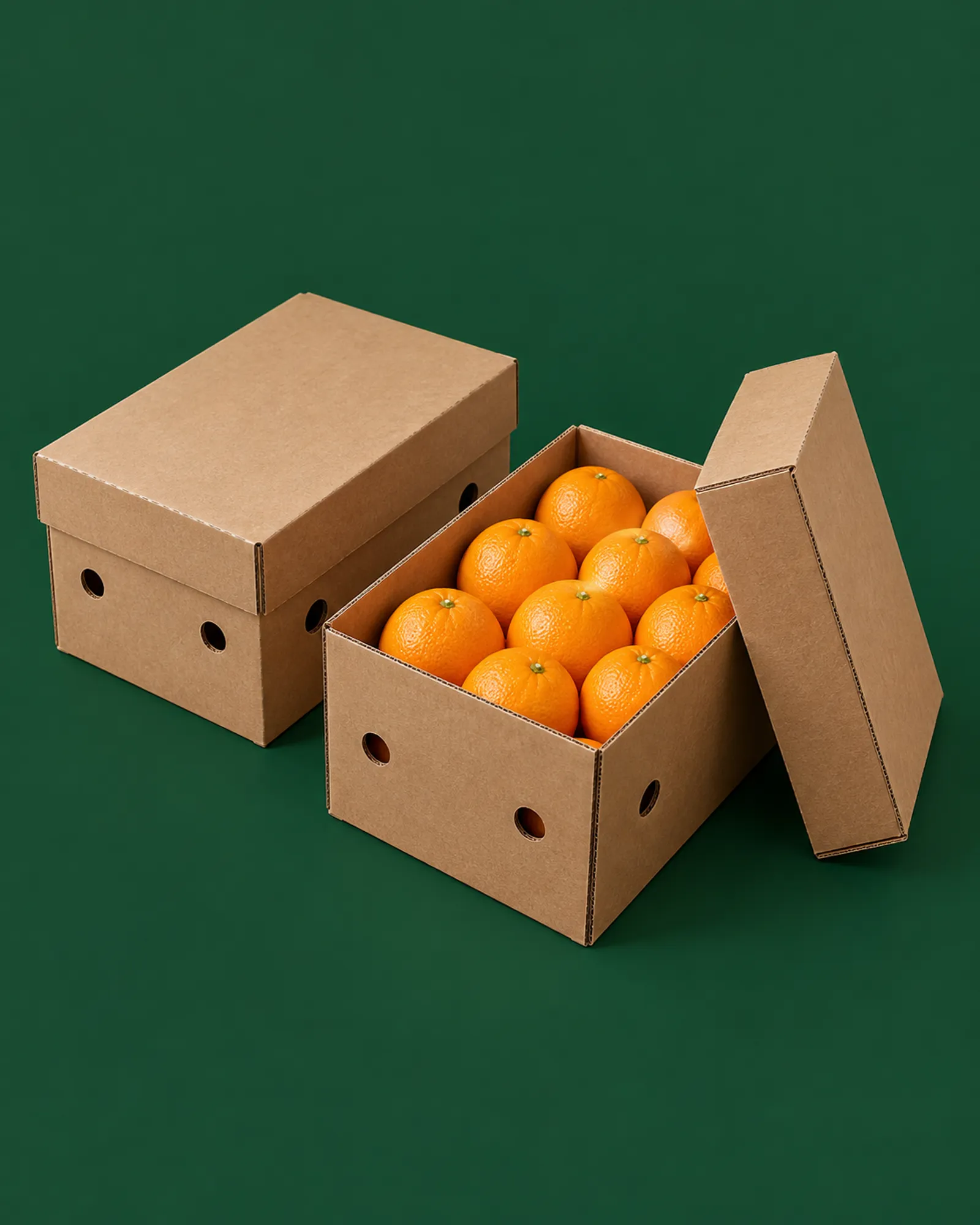
15 kg telescopic carton
A full lid over the fruit: stronger stacks, cleaner arrival.
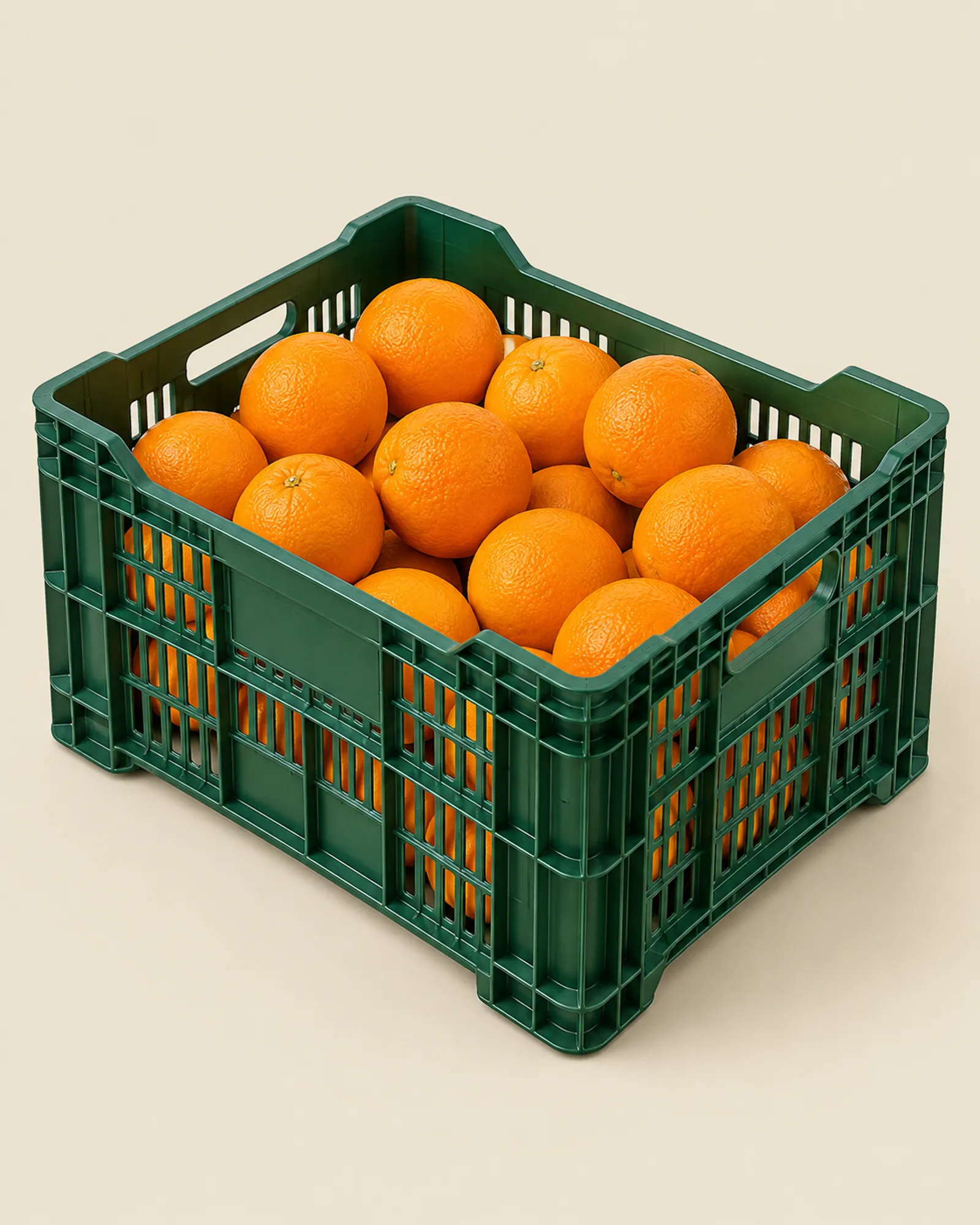
15 kg plastic box
Ventilated plastic crate for road and regional routes.
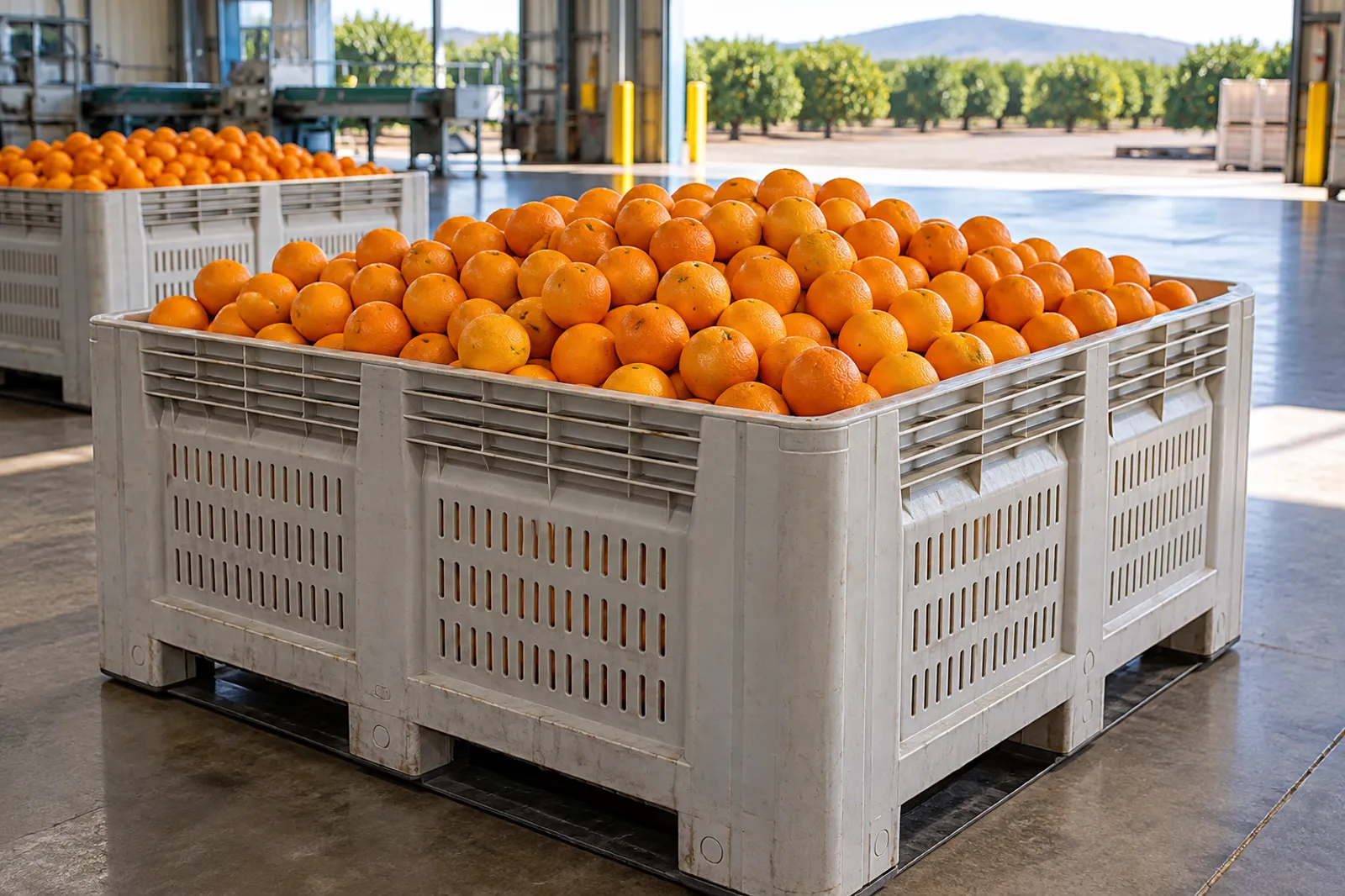
600 kg bulk bin
Bulk oranges for repackers and juice processors.
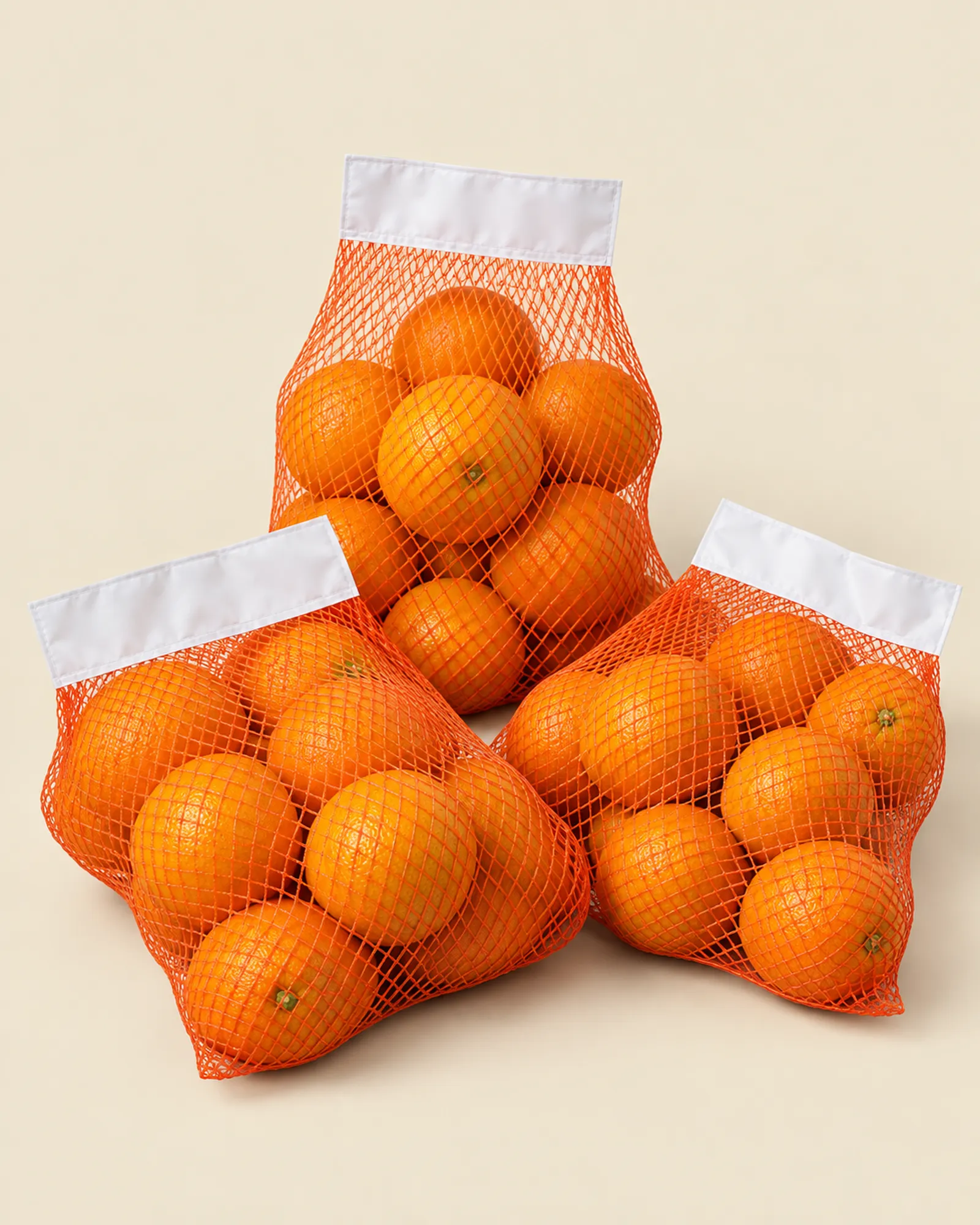
Retail net bags & private label
Shelf-ready bags and cartons in the buyer's brand, on request.
In numbers
06 — Export
Cold from the
packhouse to the port.
Reefer containers at 2–6 °C, about 20–21 pallets each, from Alexandria or Damietta. Phyto, origin and GLOBALG.A.P. papers ready with every load.
How we exportWhich orange varieties do you export?
Navel (seedless), Valencia (late, juicy) and Baladi (the local seeded orange), in five pack formats.
When is the orange season?
The packhouse calendar runs from December to May: Navel December–February, Valencia December–May, Baladi December–January. Egypt-wide, Valencia exports continue to August from cold storage (USDA).
What is the minimum order?
One 40ft reefer, about 20–21 pallets (Example). Different counts, and varieties whose seasons overlap, can share one container.
Which certifications can you show?
Fresh-citrus buyers usually ask for GLOBALG.A.P. (with GRASP), BRCGS and SMETA/SEDEX. Ask for current copies, numbers and scopes with your quote.
Which ports and Incoterms?
Alexandria and Damietta by sea; reefer trucks by road to Saudi Arabia and the UAE. FOB, CFR and CIF are usual (Example).
Can you pack under our brand?
Private-label cartons and retail net bags are on request and confirmed per programme.

07 — Season programmes
Season programmes
book early.
Tell us your market, variety, count and pack. We reply with a price and a loading plan.